







Risk and Compliance
Duty of care and excursion management software for independent schools
Trips that do not unravel.
Duty of care on an excursion is the plan, the ratio, the venues, the transport, the risk assessment, the emergency plan and the approval, all current on the morning the bus leaves.
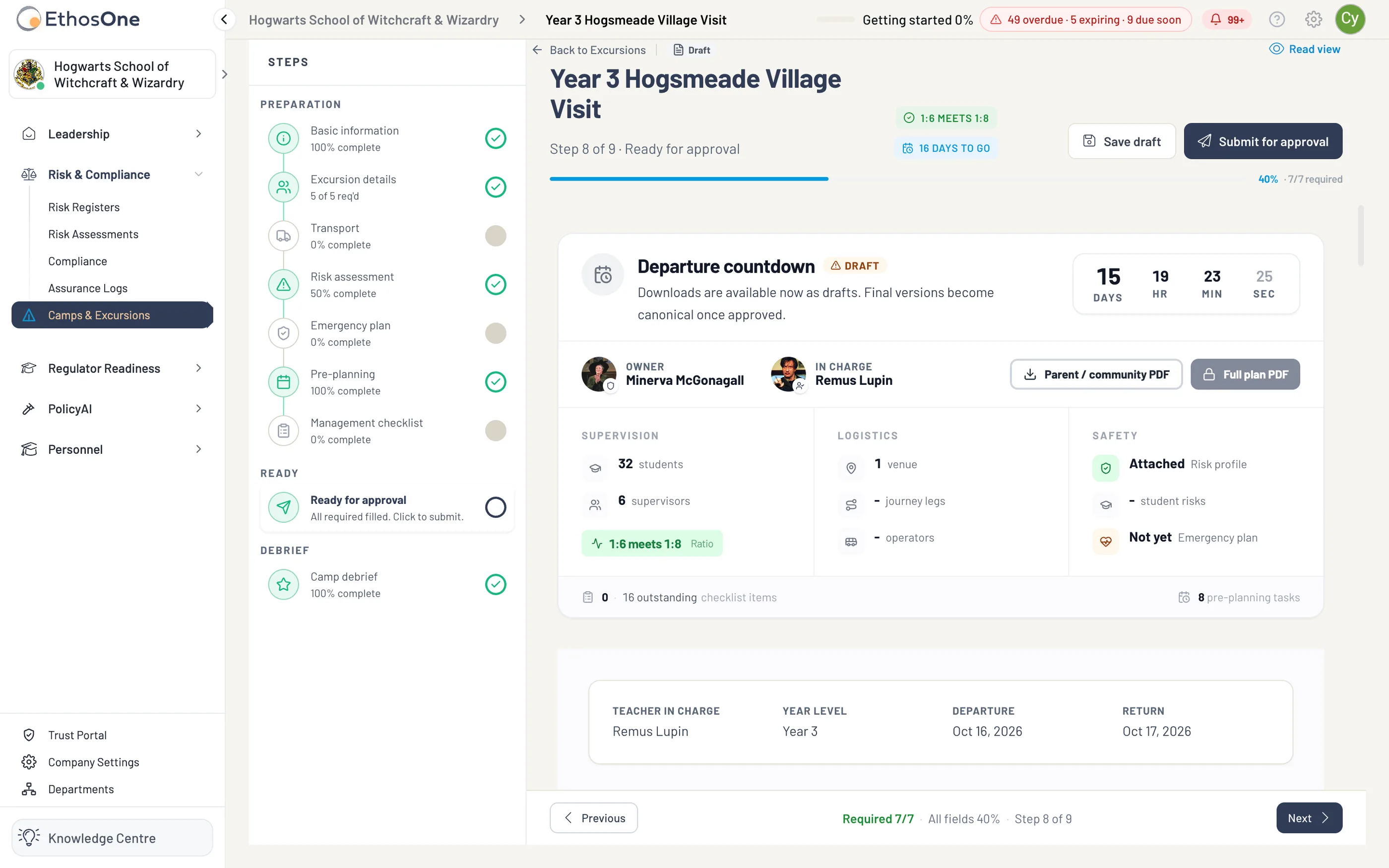
EthosOne Camps and Excursions is duty of care excursion management software for independent schools, part of the Risk and Compliance module.
Approval uses the exact current version of the operational risk assessment rather than a checklist score, and a required-items preflight shows precisely what prevents readiness.

What we keep hearing
It is 6:40 and the bus is at the gate for the Year 9 camp. The coordinator has the clipboard, the emergency contacts on her phone and a form the principal signed on Friday with the transport section blank. The driver is asking which way out of the car park. Before the engine starts, readiness still has to be a fact.
This is the room where it already was, before anyone reached the gate.
Eight views, one picture. Each one reads from the same live records.
 01
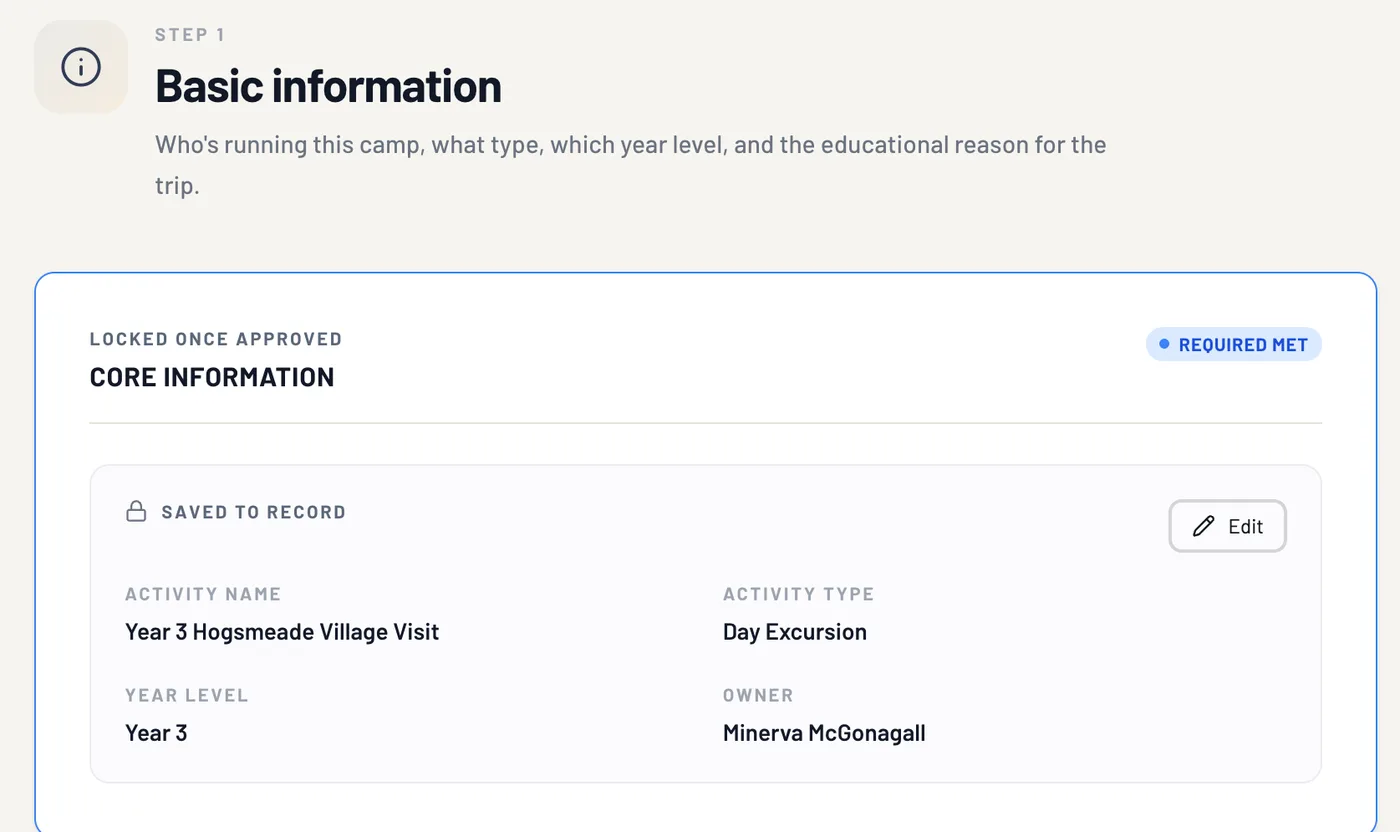
01Basic information
Purpose, type, dates, location and coordinator establish the activity and its approval context, scoped to one entity and one period. A camp is an excursion with an overnight stay, and both share one lifecycle that runs from draft through approval to a post-activity review, with a not-ready state that holds a departure back and Cancelled.
 02
02Excursion details
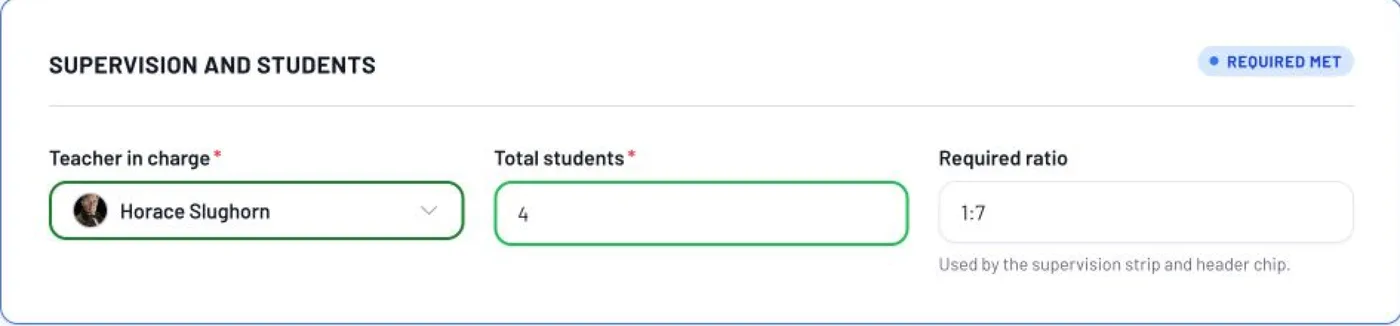
Name the teacher in charge and the supervising staff, set the student and supervisor numbers, and the workspace shows the supervision ratio. The venues sit here too: the venue, its address, any permits and the activity, captured as the conditions the risk assessment relies on.
 03
03Transport
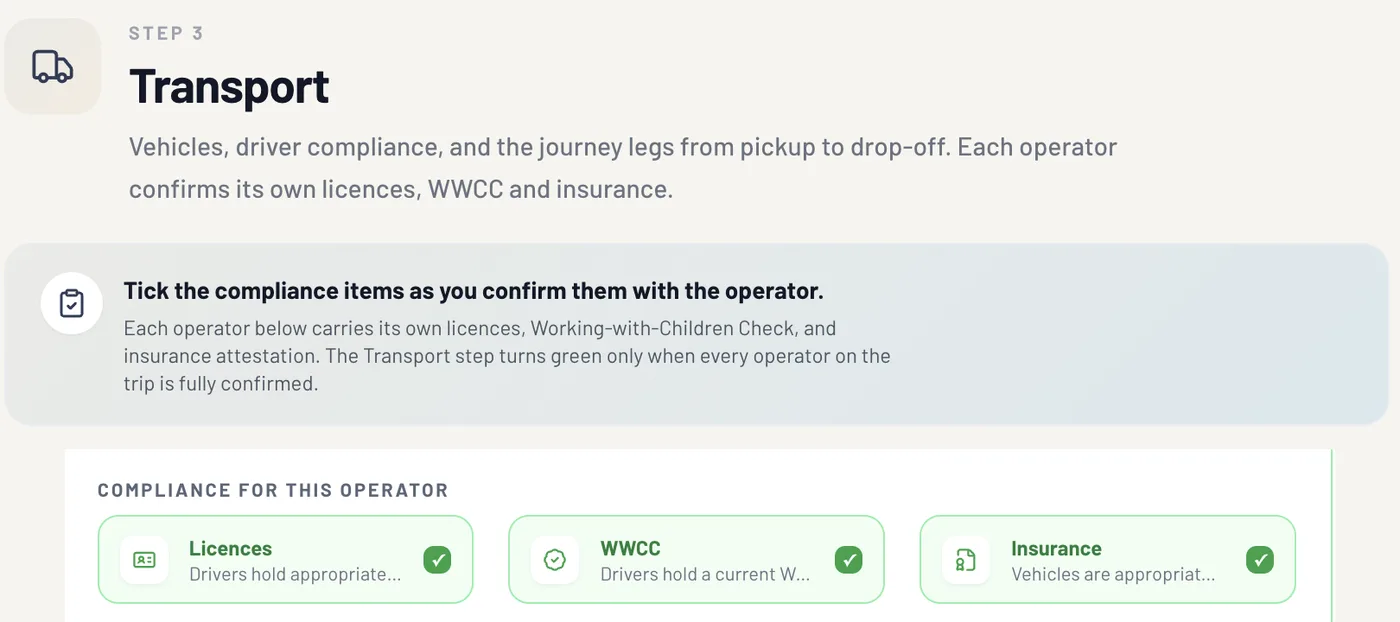
Transport legs, provider, route and requirements, with supplier and document links, so safe movement is planned rather than assumed.
 04
04Risk assessment
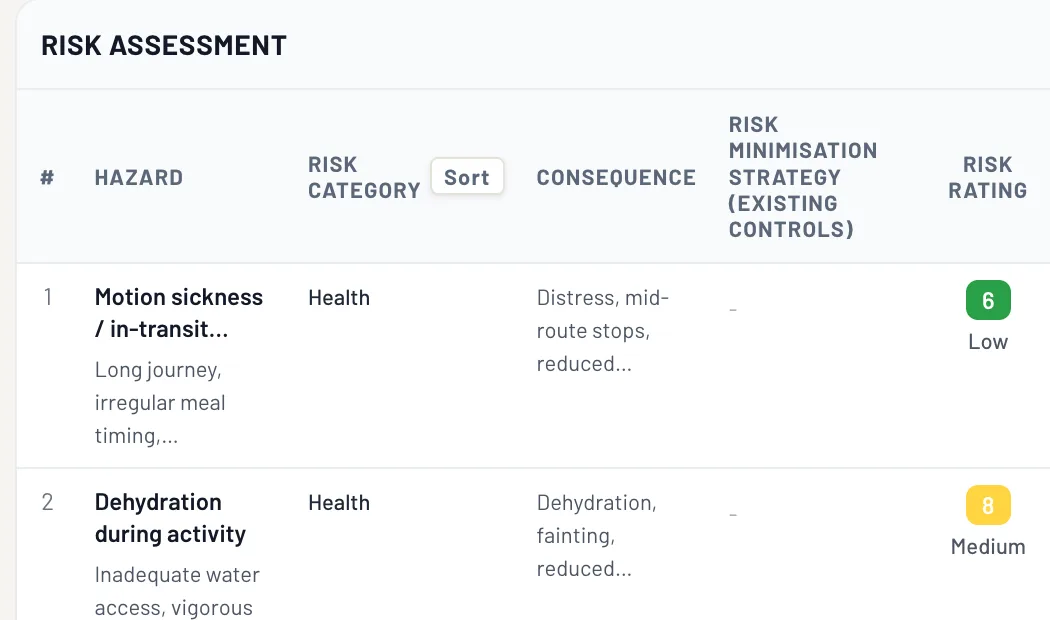
Create or link the operational assessment for this activity, review its hazards and responses, and see its status and version alongside any gaps. Approval uses the exact current assessment version, so the safeguards the approver reads are the safeguards that apply.
 05
05Emergency plan
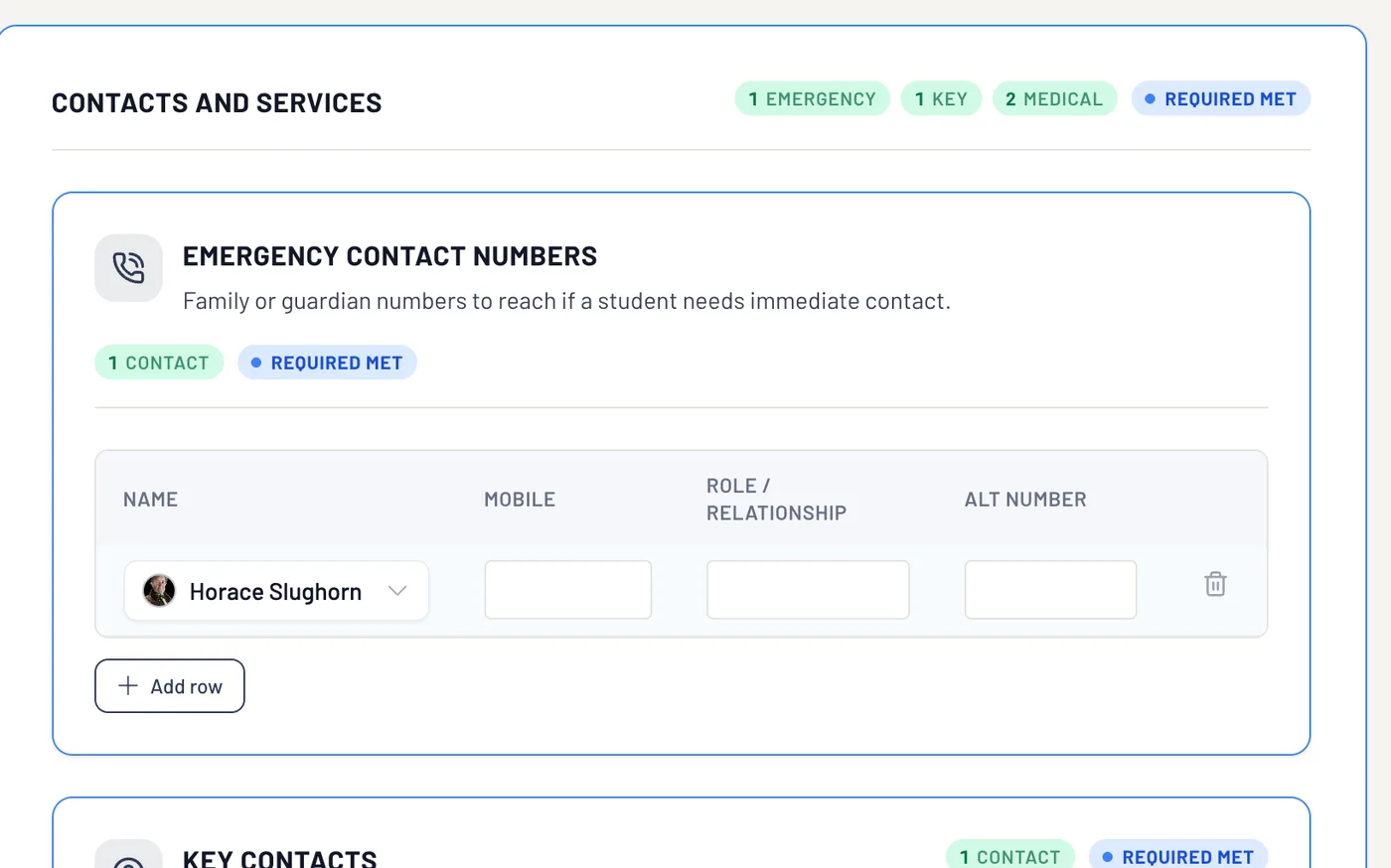
Emergency contacts, communications and the emergency response for the activity, in restricted fields so sensitive detail stays with the people who need it.
 06
06Pre-planning and the management checklist
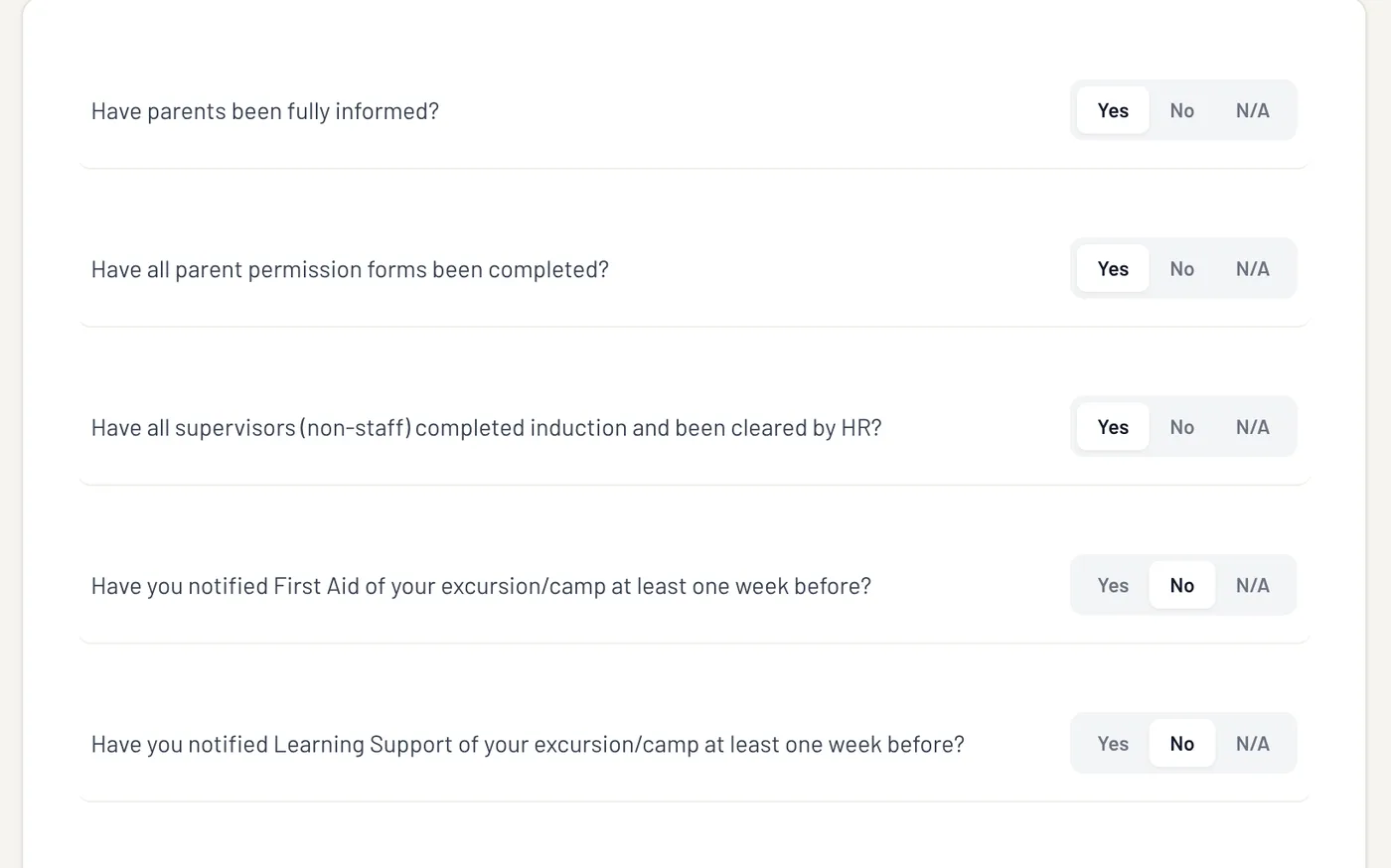
The bookings, briefings and tasks that have to be done before the day, held against the plan and ticked off in the workspace rather than on a clipboard.
 07
07Review and approval
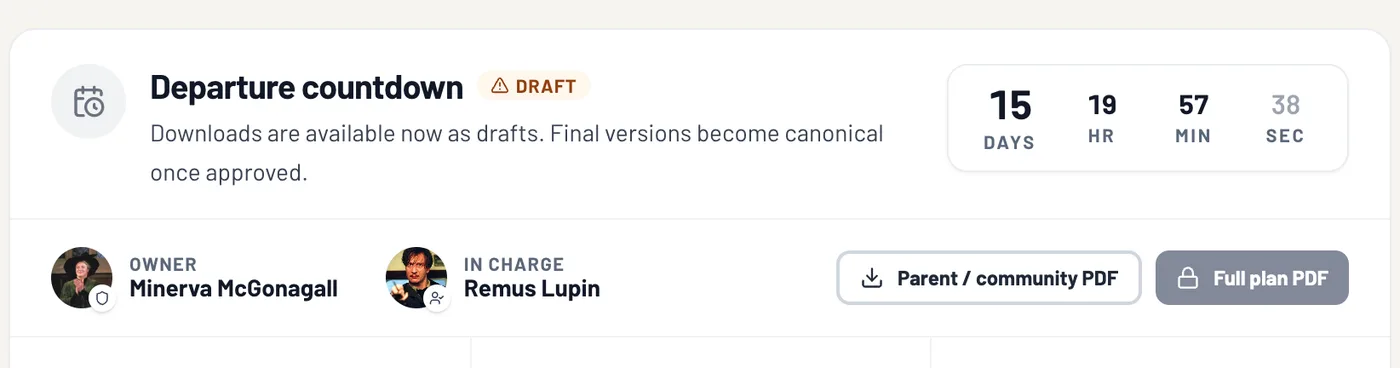
Submit for approval and the required-items preflight lists what is missing across excursion details, transport, the emergency plan and the risk assessment. The approver reviews and decides, and the approved plan records the assessment version and the decision.
 08
08Camp debrief
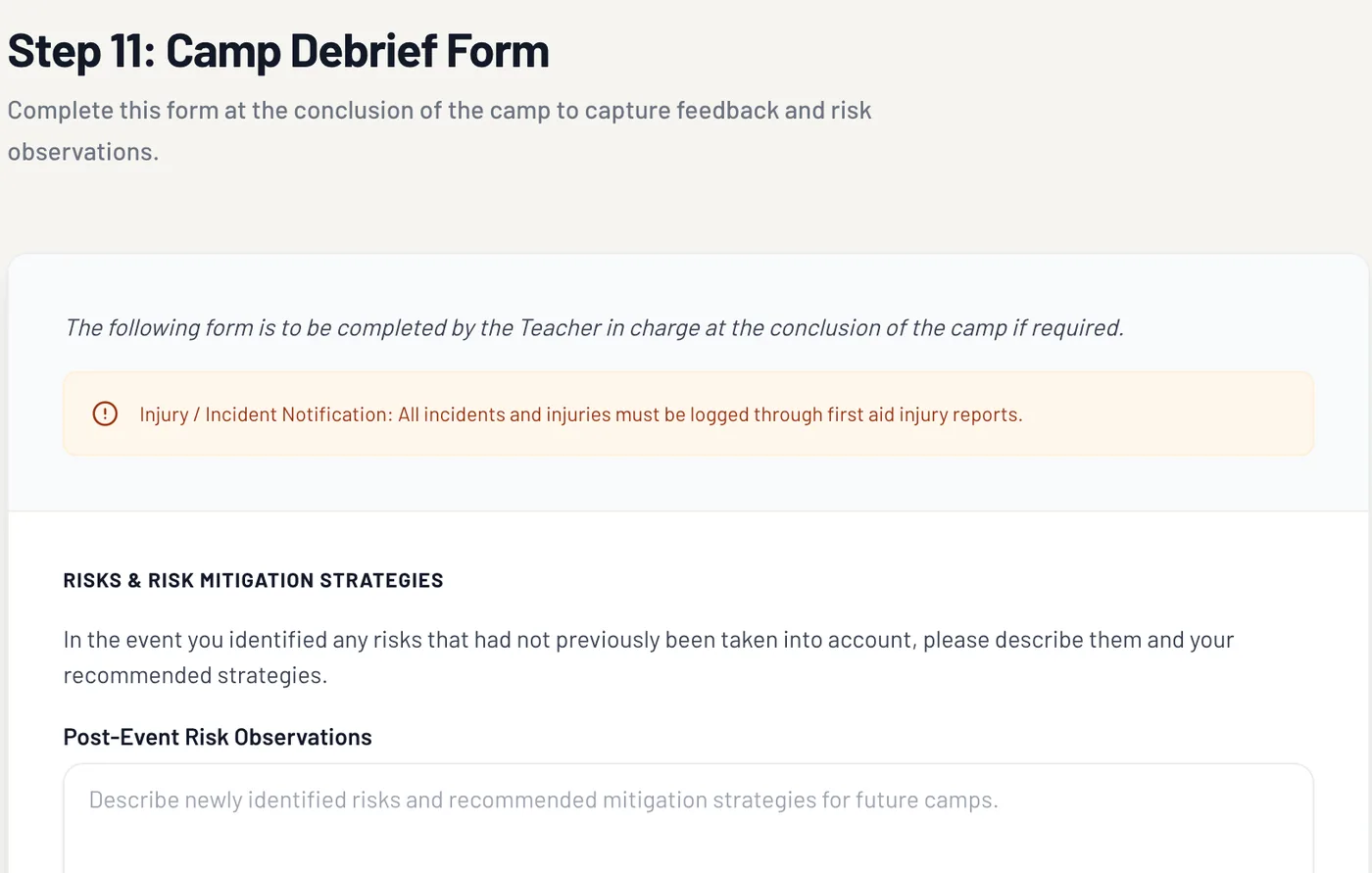
Once the group is home, the debrief records what actually happened, the risk observations and any injury or incident notifications, and closes the plan with its lessons for next time.
Camps and excursions is the most tangible piece of the accountability spine, the place where governance either helps a teacher on a Tuesday or gets in the way. The plan links to its risk assessment, the readiness requirements have owners whose work shows in Actions, an incident on the day lands in assurance logs, the approved snapshot is the evidence for an insurer or a regulator, and repeated excursion hazards inform the operational register in Risk and Compliance without being mistaken for it.
Keep excursion risks connected to the school's governed risk management framework.
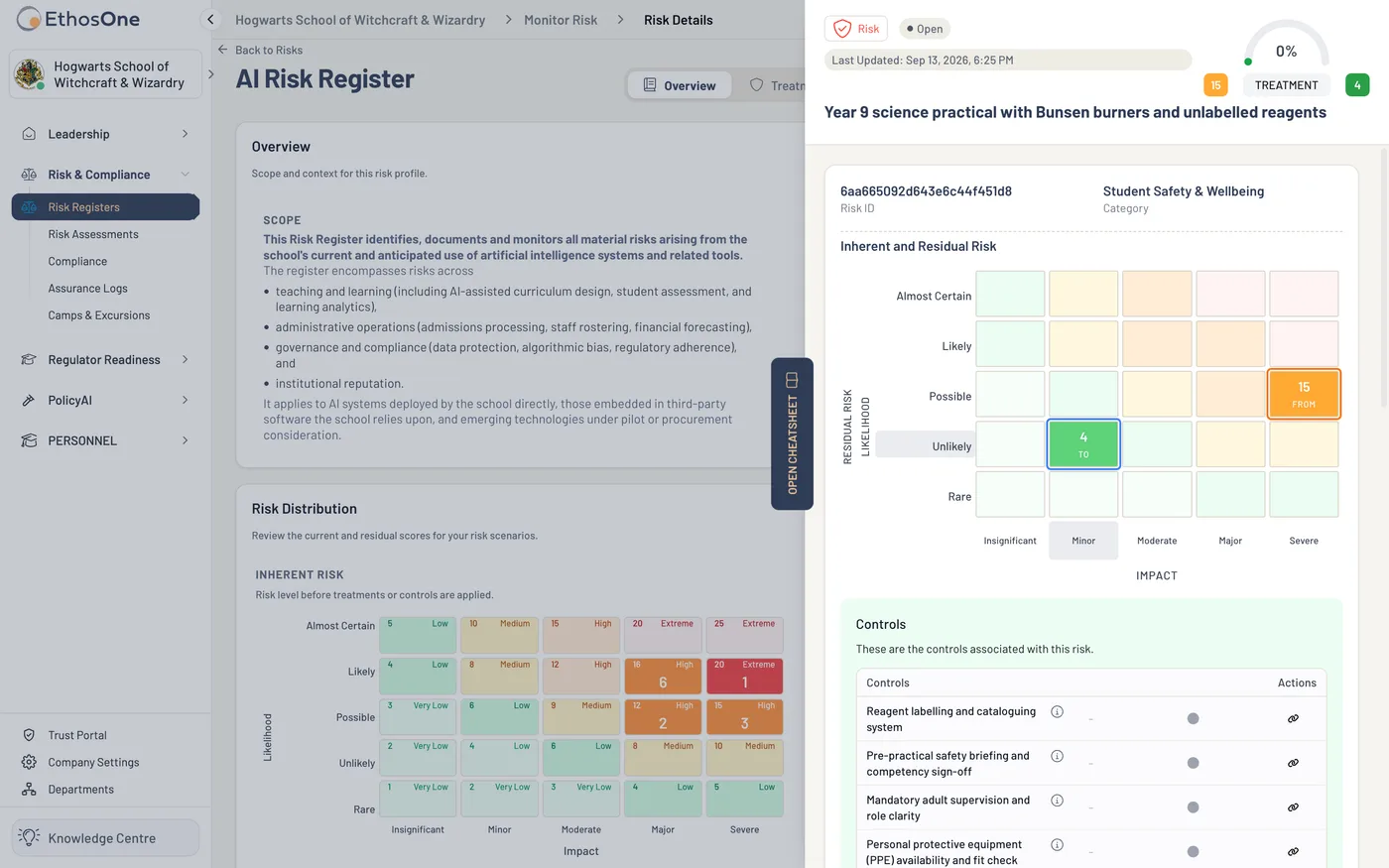
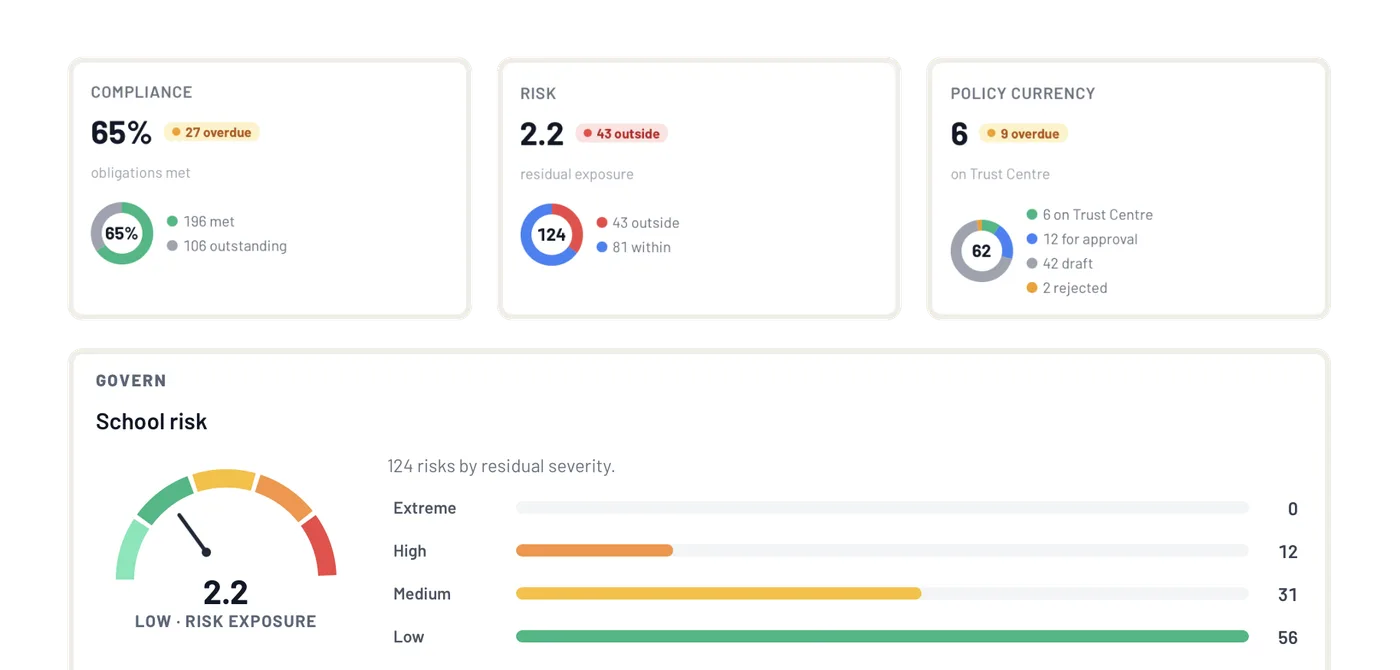
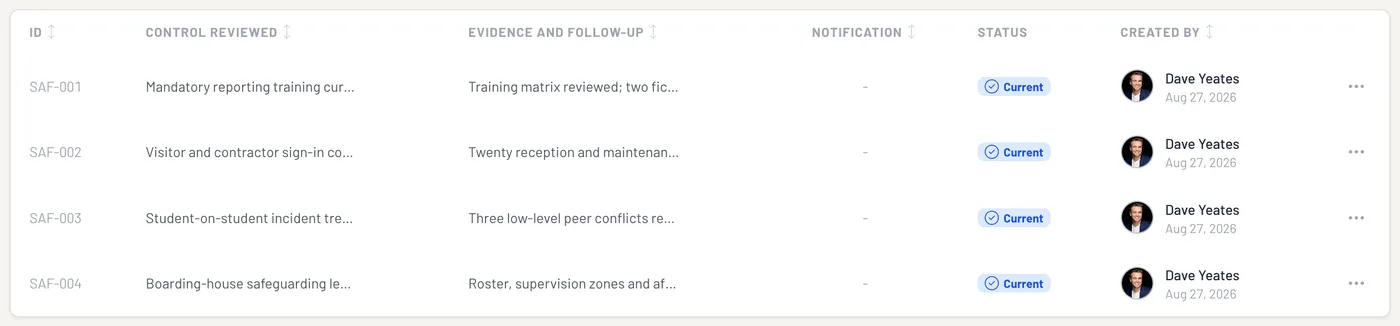
An embedded helper, aware of your school's context, works inside the workspace.
It drafts the purpose summary from the facts you supply, flags a ratio or role gap, proposes an itinerary and a checklist for the coordinator to verify, points out a missing transport fact, drafts an emergency scenario checklist, summarises the gaps before approval and drafts the post-activity summary. The people, the providers and the decision stay with the school. The helper does not select staff, does not assert that a provider is compliant and does not make the approval decision; sensitive medical data stays bounded, and any real message to families requires a person's confirmation.
Sovereign frontier AI, hosted in Sydney and Melbourne.What it does not do
- It does not call an excursion ready because the form exists.
- It does not replace the linked operational risk assessment with a checklist score.
- It does not permit departure with unresolved critical approval or safety gates.
- Stored in AustraliaAWS Sydney and Melbourne, one database per school
- AI stays in the country tooHosted in Sydney and Melbourne; never trained on your content
- Published, not describedOur policies in the Trust Centre · How we handle your data
“It meets all of the real frustrations of business directors in one place.”
 Nick MillerDirector of Business, Blackfriars Priory School
The six we are asked every time.
Still weighing something up? Thirty minutes with us, on your own registers, answers the rest.
Book your school a demo01What does duty of care mean for a school excursion?
A school must take reasonable steps to protect students from foreseeable harm, and that duty stays with the school even when a venue or transport provider is involved. On an excursion it is evidenced by the plan, the supervision, the consent, the medical and emergency arrangements and the risk assessment that matched the activity.
02What stops an excursion being approved when something is missing?
The required-items preflight lists every unmet requirement with its owner, and the plan cannot be approved ready while a critical requirement is incomplete or the assessment is unapproved or expired.
03What happens if the venue changes after approval?
The venue is captured with the risk assessment at the time it is done, so a new venue needs a new assessment. The approved plan and its assessment stay as they were, so the school can show what was approved for the original venue.
04Where do incidents on the excursion go?
The record itself lives in assurance logs, and the camp debrief captures what happened once the group is home.
05How do camps and excursions work?
A camp or excursion is one structured risk assessment: the hazards, the controls against each one, and the sign-off from the person who approved it. It exports as a bowtie report, so the reasoning is legible to a board or an assessor.
Work health and safety is the heaviest body of obligation a school carries and the one least associated with schools. Those duties reach individuals rather than institutions, and prosecutions test whether an adequate risk assessment was carried out in advance, not whether a policy existed.
Assurance logs record what actually happened on the day, which is the part that is usually missing when someone asks later.
06Risk and Compliance, in full: what does it cover?
A camp or excursion is planned in one nine-step workspace that holds the plan and venues, transport, the linked risk assessment, the emergency plan, pre-planning, the management checklist and the approval, with a debrief once the group is home. It is for excursion coordinators, supervising teachers, the principal who approves and the business manager who holds the evidence, and it is included in the Focus module at $5,000 a year on top of Core.

What are the AI paragraphs you are currently missing from your policies? Watch how we do it.
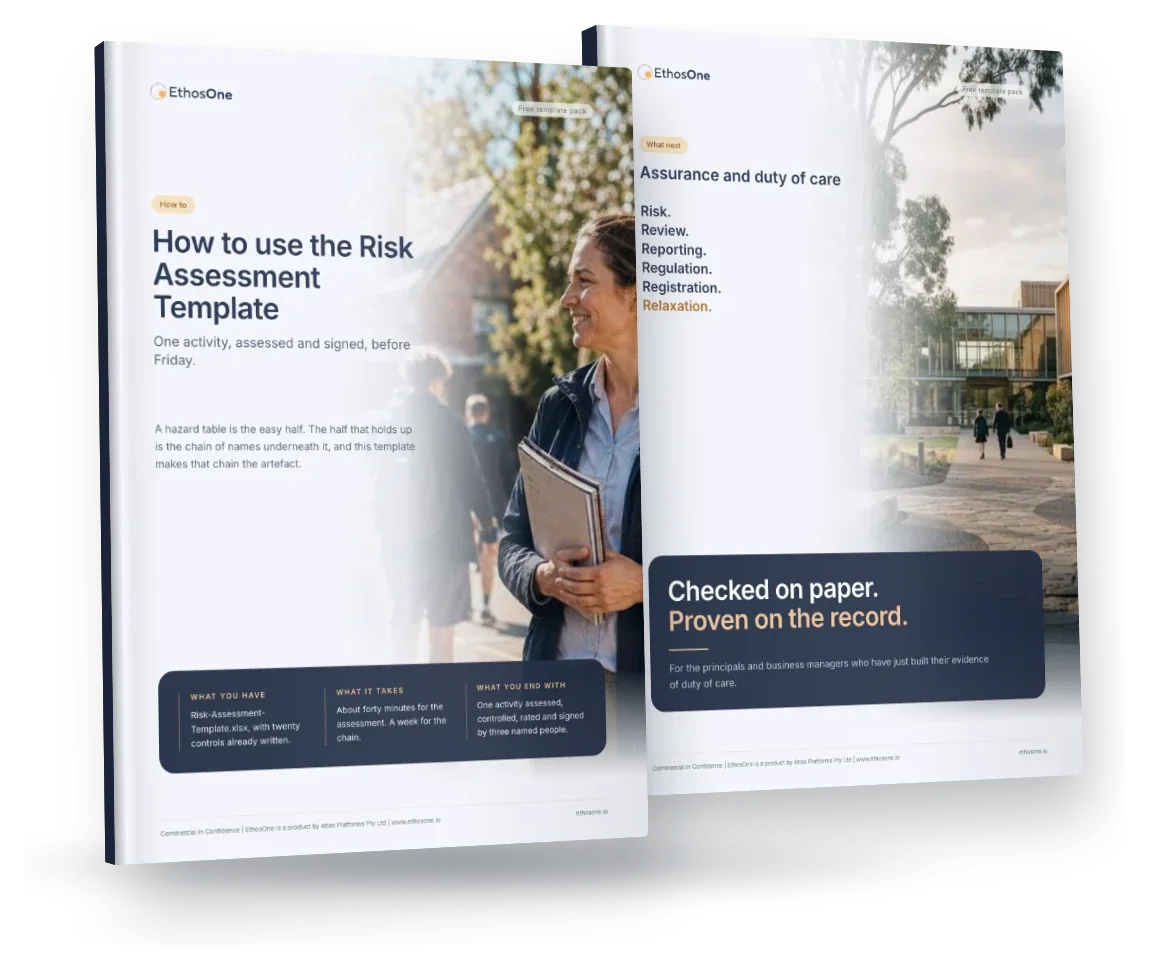
Free, under ten minutes, and yours to keep whether or not you talk to us.
More free templates and tools

By the time the bus is at the gate,nothing is left blank.
Risk and Compliance: $5,000 a year with no per-user fees.