









School risk assessment software for independent schools
The assessment a teacher actually fills in.
A risk assessment is not the register. The register is what the board sees; the assessment is one kiln, one camp, one contractor, on one day.
Real captures · Risk and Compliance · Hogwarts demo tenant.
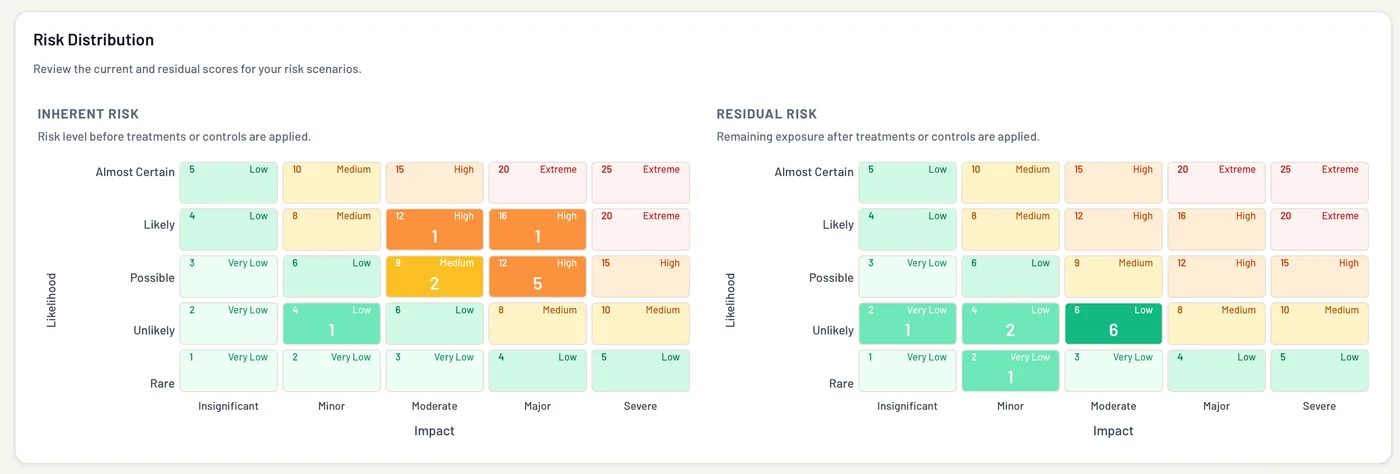
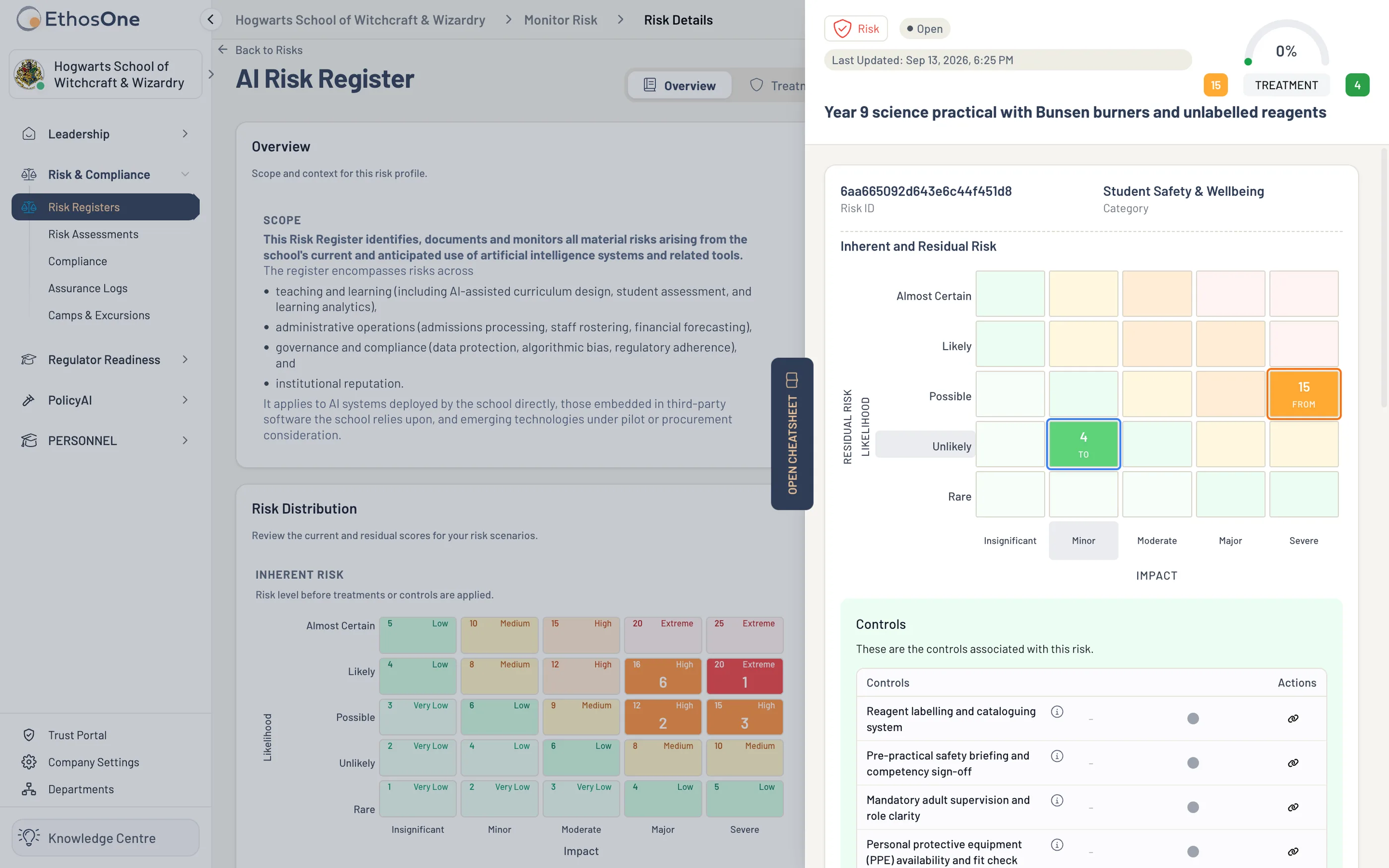
A school risk assessment records a hazard, why it could happen, what would follow, how likely and how severe that is
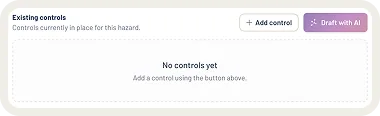
What is being done about it, and who is responsible. Each hazard carries a cause, a consequence, a matrix rating, a response and a responsible owner.

What we keep hearing
The assessment for the Year 9 camp exists. It was done properly, by someone who knew the site, and it is a Word file on a laptop that left with them. The camp runs again in March.
Whoever picks it up starts from a document they cannot date, cannot tell was approved, and cannot tell whether the hazards in it were the hazards of that site or of a different one two years ago.
The problem
The form is whatever was to hand
One faculty assesses on a template from a conference, another on a form the previous business manager built, a third on a page of notes. None of them is wrong and none of them can be compared, so nobody can say which activities have been assessed and which have not.
A rating without a reason is a number
A hazard marked "medium" with no cause and no consequence tells a reviewer nothing about whether the judgement was sound. It tells them somebody had an opinion.
The assessment and the activity drift apart
The venue changes, the supervision ratio changes, the bus company changes. The assessment does not, because nothing connects it to the thing it was assessing.

Five views, one reconciled picture. Each one drills to the record it came from.
 01
01Risk assessments
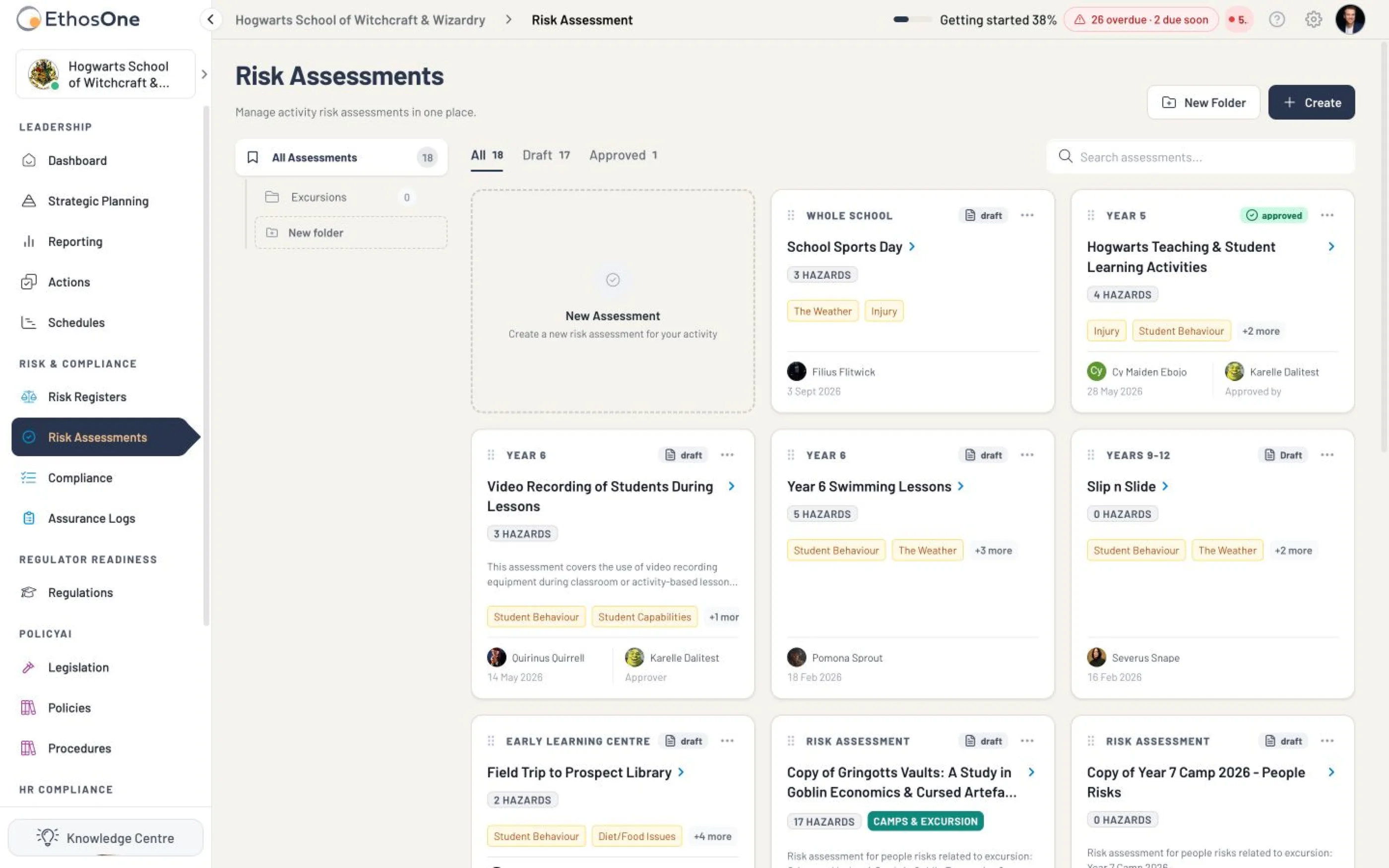
Every assessment the school holds, in folders by operating context. A coordinator opens Excursions and sees excursions, not the whole register.
 02
02Draft and approved
The filter that answers the only question a coordinator has in the week before an activity: what is still a draft. Approved work and work in progress are never the same list.
 03
03Hazard detail
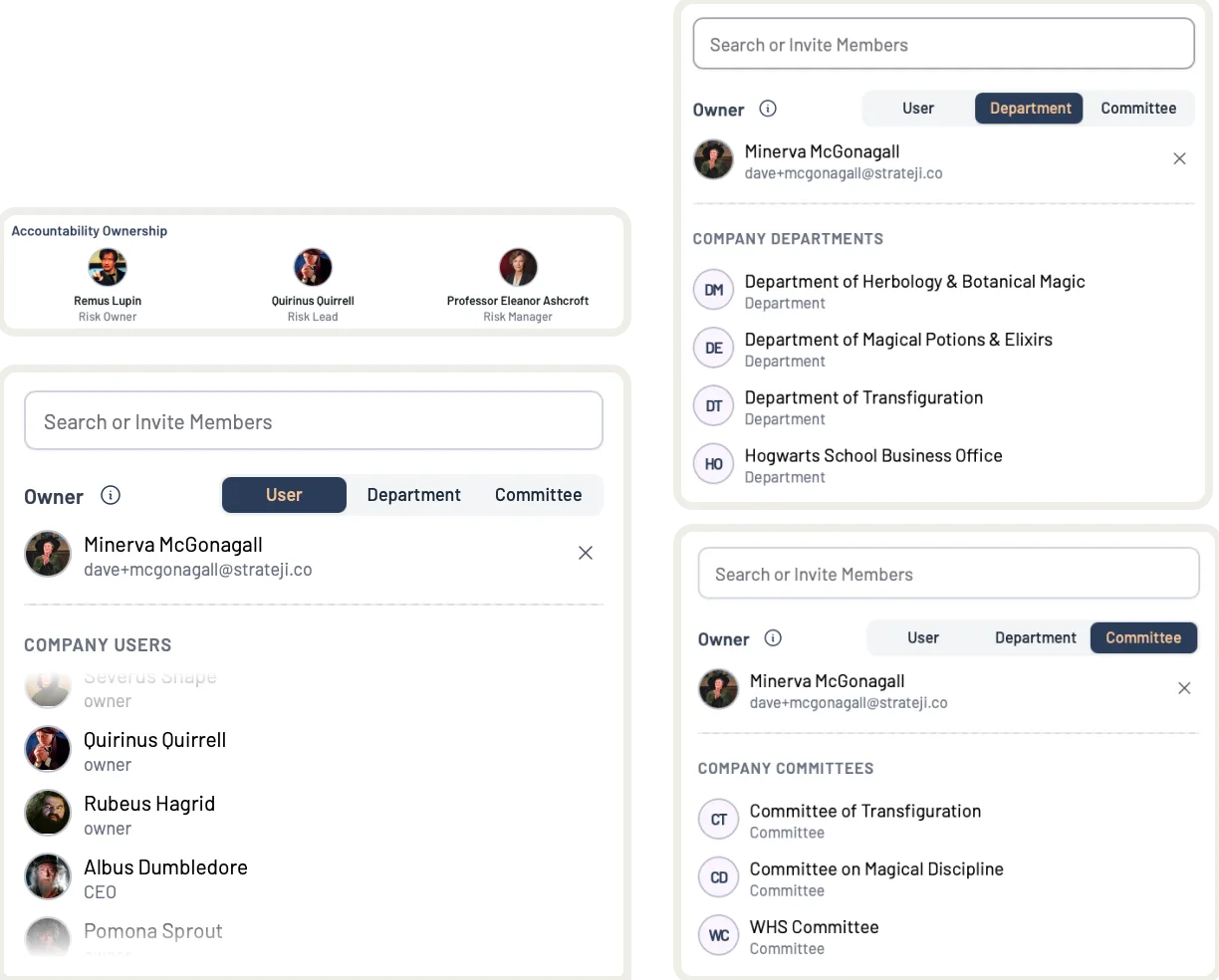
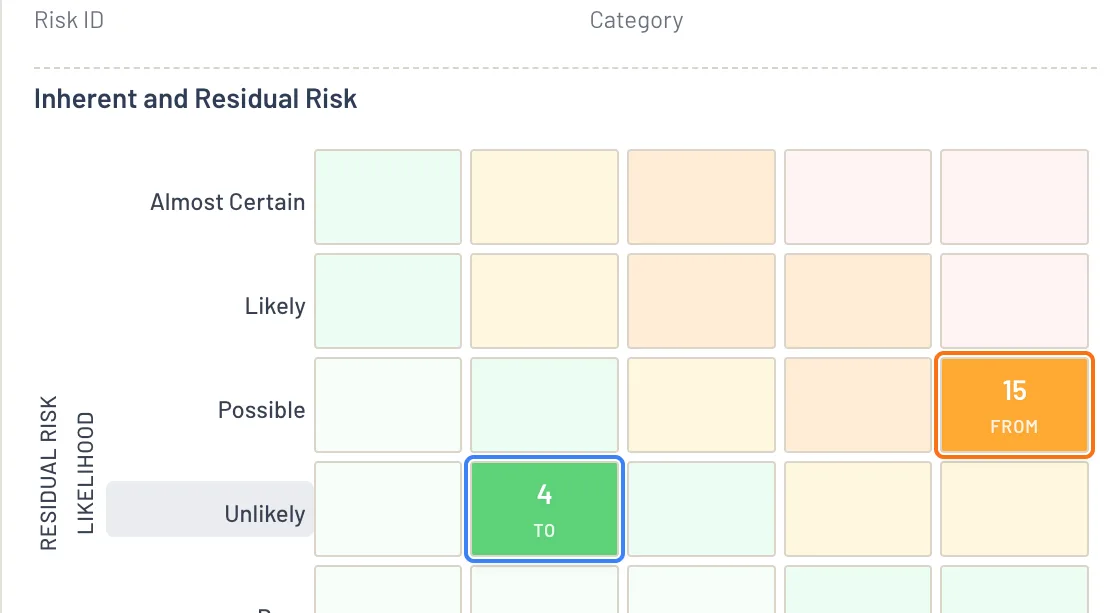
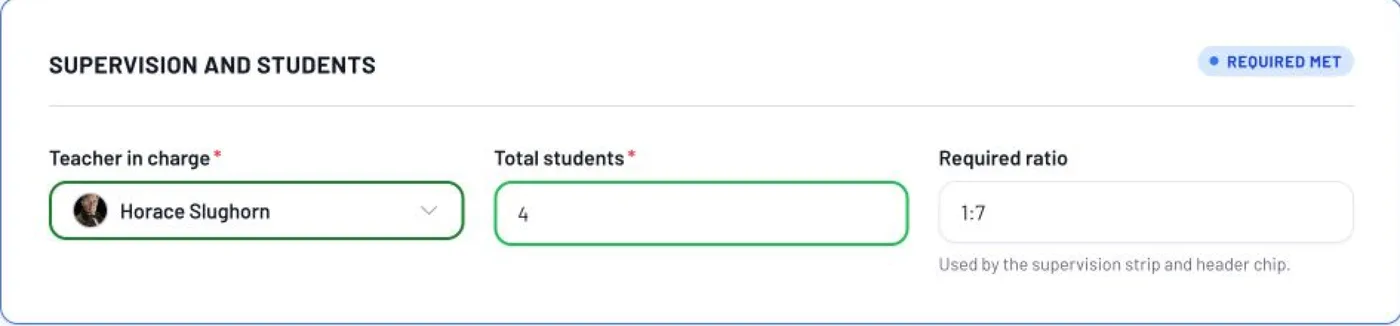
One hazard, with its cause, its consequence, a matrix rating, the response and a responsible owner. The rating sits beside the reasoning that produced it, so a reviewer can disagree with the judgement rather than guess at it.
 04
04Bowtie report
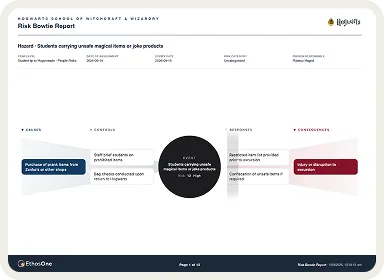
The assessment as a Bowtie PDF: the hazard in the middle, the causes on one side, the consequences on the other, the controls between. It is the picture a board reads without training and the one most reviewers ask for.
 05
05Excursions
A nine-step workspace covering basic information, staff, participants, venue, transport, medical and emergency, risk assessment, approval and closure, including departure checks and post-activity review. Each excursion links to a current operational risk assessment rather than to a checklist score.
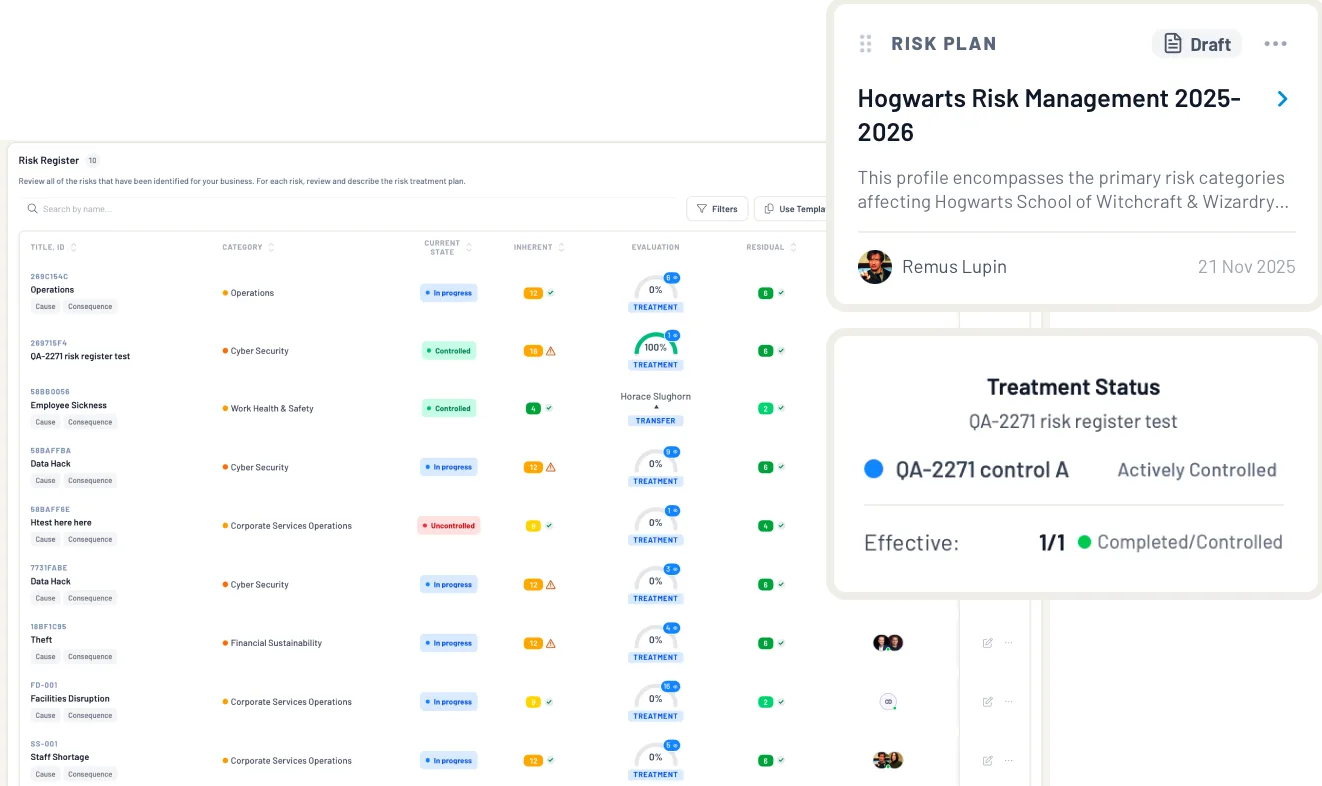
The register is the board's summary of exposure, rated against an approved appetite, and it lives in school risk management software. Assessments are the operational layer underneath it. Keeping them in one document either frightens a board with the detail of a kiln or hides the kiln inside a strategic rating.
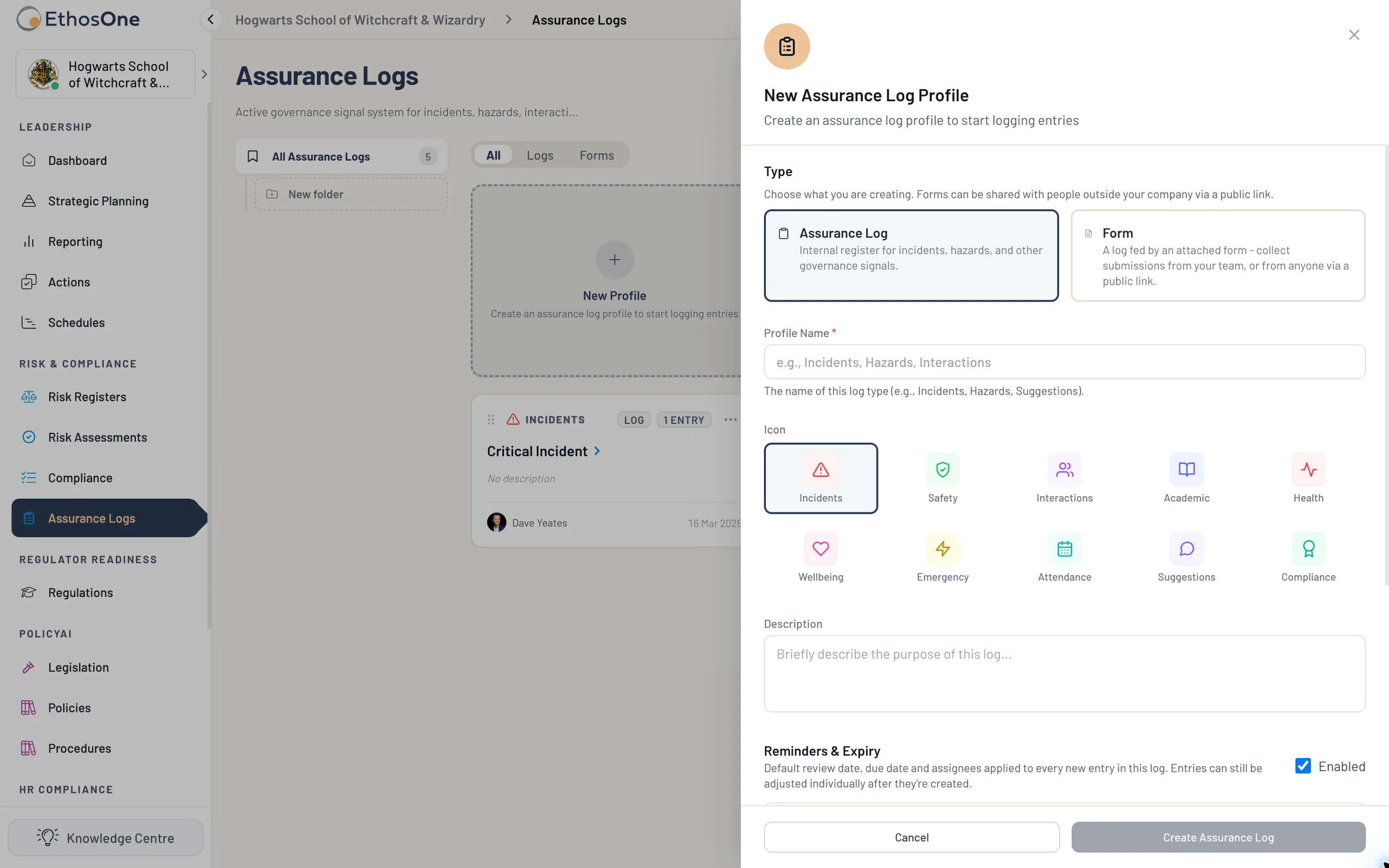
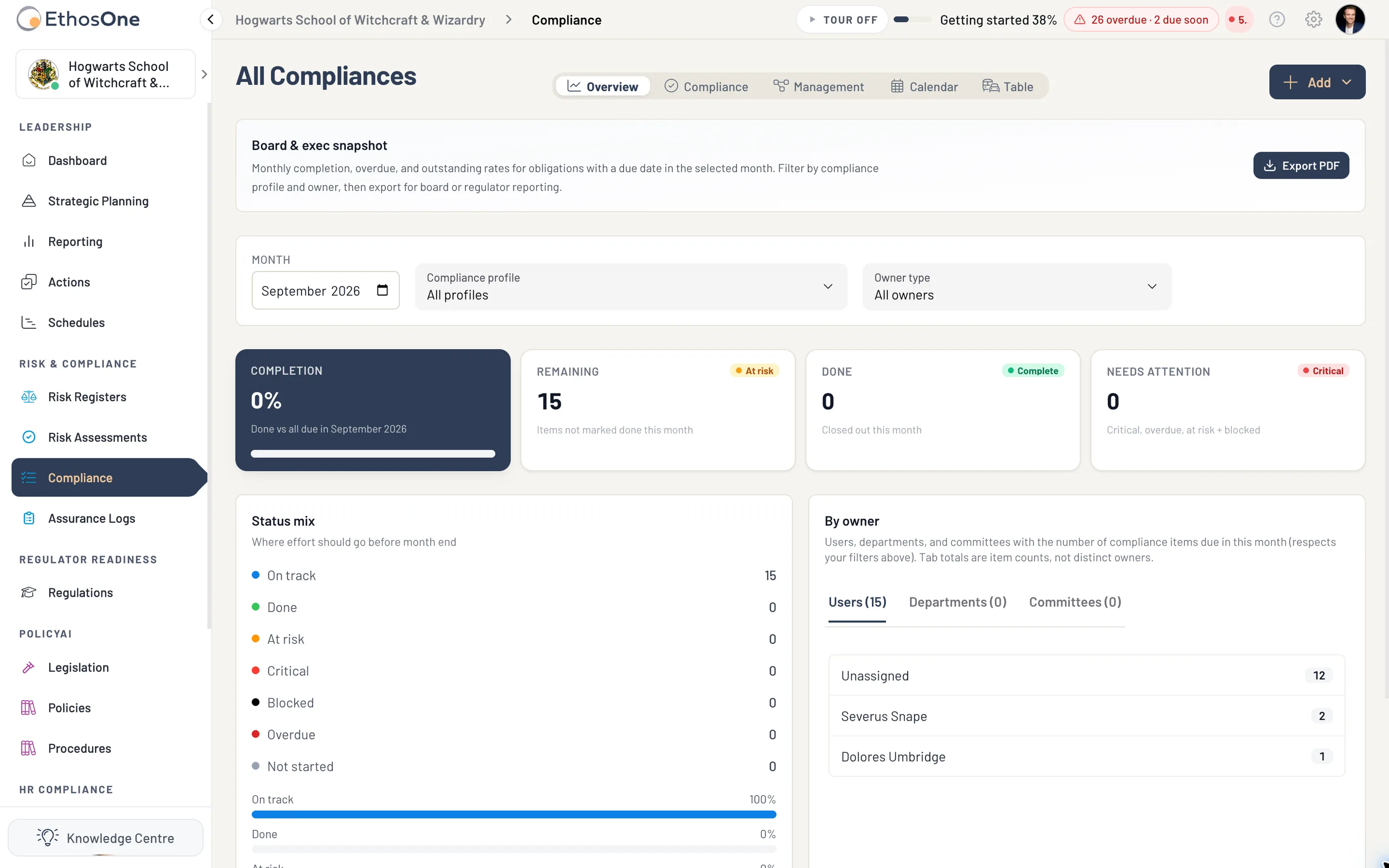
Evidence captured while the work happens goes to assurance logs and forms, and obligations with a date and an owner sit in the compliance calendar.
Who it is for
The teacher completing an assessment for an activity they are running. The coordinator who has to know what is still in draft. The business manager who signs. The principal who carries duty of care whether or not the paperwork was finished.
- Stored in AustraliaAWS Sydney and Melbourne, one database per school
- AI stays in the country tooAmazon Bedrock; never trained on your content
- Published, not describedTrust Centre · ISMS policy · How we handle your data
The seven we are asked every time.
Still weighing something up? Thirty minutes with us, on your own registers, answers the rest.
Book your school a demo01Who fills these in, in practice?
The person running the activity. The point of a fixed shape is that a teacher can complete one without training and a coordinator can read fifty of them without interpreting fifty formats.
02Can we see what is still a draft before a camp leaves?
Yes. Assessments filter by Draft or Approved, which is the question a coordinator has in the week before an activity.
03What does an excursion actually involve?
Nine steps: basic information, staff, participants, venue, transport, medical and emergency, risk assessment, approval and closure. Departure checks and post-activity review are part of it. The excursion links to a current operational risk assessment rather than a checklist score, so the assessment and the activity stay attached.
04Is this the same thing as the risk register?
No, and keeping them separate is deliberate. The register is board-level exposure against appetite. An assessment is one activity on one day. They connect, and they are not the same document.
05Can we produce something for the board or a reviewer?
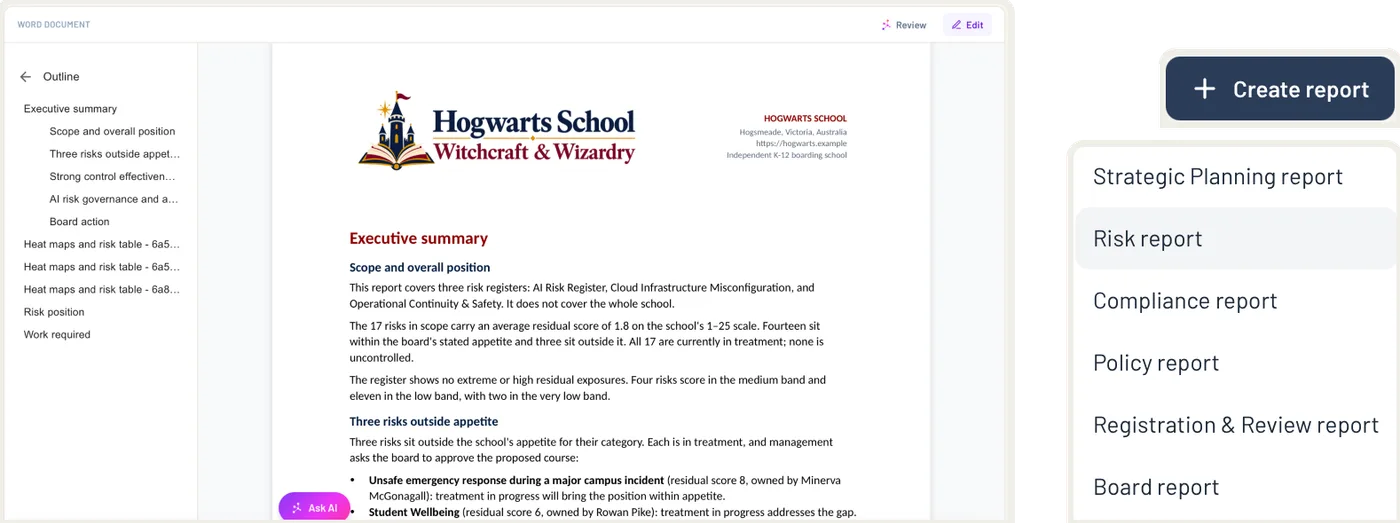
A Bowtie report generates from any assessment as a PDF: hazard, causes, consequences, controls. It is the form most boards and most reviewers already read.
06What does it cost?
Risk assessments sit in Risk and Compliance, a Focus module at $5,000 a year on top of Core at $15,000 a year with unlimited users. Every price is published and the estimator on the pricing page returns a number without a conversation.
07Risk and Compliance, in full: what does it cover?
EthosOne keeps those assessments in folders by operating context, so excursions sit with excursions and plant sits with plant, and filters them by Draft or Approved so a coordinator can see what is still waiting. A Bowtie report generates from any assessment as a PDF, which is the form most boards and most regulators recognise. Excursions have their own nine-step workspace that links to a current operational risk assessment rather than a checklist score. It is part of Risk and Compliance, a Focus module at $5,000 a year on top of Core.

What are the AI paragraphs you are currently missing from your policies? Watch how we do it.
Free, under ten minutes, and yours to keep whether or not you talk to us.
“It meets all of the real frustrations of business directors in one place.”


“School governance and risk is a complex area without a clear solution.”


The assessment a teacheractually fills in.
Risk and Compliance: $5,000 a year with no per-user fees.